
ALL YOUR HIPHOP AND ENTERTAINMENT NEWS IN ONE PLACE!
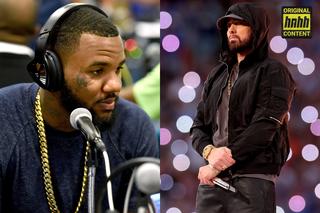
“The Black Slim Shady”: Breaking Down The Game’s Eminem Diss Track
August 16, 2022
From issues at Aftermath to challenging the Rap God's status, The Game went at Eminem on all fronts on "The Black Slim Shady."
As one of L.A.’s most longstanding and respected rappers, The Game’s pen game and street cred are nothing to take lightly. His legendary work in the 2000s, best represented by classics like The Documentary (2005) and Doctor’s Advocate (2006), formed a legacy that still makes waves today, as evidenced by his recent high-profile work with Kanye West. His latest album, Drillmatic - Heart vs. Mind, features the Chicago rapper among a slew of other rap stars, but the standout moment from the 31-track opus is The Game’s 10-minute diss track towards Eminem, “The Black Slim Shady.”
10 minutes is a long time to go at any rap adversary, let alone one of the most legendary rappers to ever touch the mic. Today, we're breaking down and analyzing the scathing diss track in its entirety. Will it live up to standards set by Pusha T and Eminem himself among the greatest modern-day diss tracks? Or will The Game take a different approach to challenge another rapper’s career? Is it filled with cold stabs at Slim Shady or does it fall short of its potential? Most importantly, is it good enough to warrant a response from Eminem, and what does it mean for the legacies of both rappers?

As two veterans who remain active in the rap game, it’s important to take a look at what brought each of them to the point of "The Black Slim Shady." The Game and Eminem were label mates on Aftermath until a feud with 50 Cent, founder of G-Unit Records, pushed the Drillmatic rapper to Geffen Records. The Compton native was arguably the West Coast’s most consistent and high-profile rap star to emerge in the 2000s. As such, he became the face of a renewed East Coast/West Coast rivalry against New York’s leading voice at the time: 50 Cent, an artist whom he continued to beef throughout his career.

As a close friend and mentor of Fif, Eminem appeared to be automatically aligned with his signee at the height of The Game & 50 Cent's falling out. What’s interesting about The Game's one-sided beef with Em is that there really doesn’t seem to be a huge personal stake in calling out the self-proclaimed Rap God. The feud began during a Drink Champs interview in March where The Game claimed he was better and more respected in the rap scene than Eminem. At the time, he made no mention of any personal resentment towards Eminem. However, he later added fuel to the fire by commenting on pictures of Eminem's daughter, Hailie.

There remains little public information regarding much of the context of The Game’s bars on "The Black Slime Shady." All we can assume is that The Game simply wants the smoke from Marshall Mathers, whether that's proving a point to his true enemies, building dialogue around his album release, or establishing himself in the ring against one of the genre’s biggest artists. Hip-hop is, after all, the most competitive genre in music.
While we’re covering history, let’s unpack The Game’s industry-related disses on “The Black Slim Shady,” from label woes to the other artists caught in the crossfire. A few bars are directed at Eminem’s inner circle: Interscope Records, label manager Jimmy Iovine, and the aforementioned Dr. Dre and 50 Cent. “I killed Dr. Dre in my basement last night,” The Game raps. Later in the song, he criticizes Eminem for basically leaving him for dead as an Aftermath labelmate and contributing to the narrative that The Game was pushed to the side in favor of 50 Cent. He raps, “Left for dead on the Doctor's Advocate/ Dre never executive-produced it, I just imagined it/ Oh, here goes the magic tricks/ Candy shops and the magic stick,” The Game raps, referencing a few Fif songs in the process.
The Game also claps back at claims that Eminem is the king of Detroit rap. Instead, he bestows that crown upon Big Sean, rapping, “And the biggest rapper in Detroit, that award is Sean Don.”
Another rapper that outclasses Eminem, according to The Game, is Jay-Z. He specifically references Jay’s track “Renegade" ft. Eminem, claiming Em “really gave it to Hova" as far as who had the better verse. The industry disses continue a bit further into the song, bringing the whole label into the mix. “You done pissed off Jimmy, Universal, and Interscope/ Know, I got Jimmy, Slim, 50, and Universal in a scope," The Game says.
In one of the final verses, The Game says Dr. Dre “ain’t got a lot to say,” seemingly in reference to the earlier line about killing Dre in his basement (which is a cheeky reference to Eminem’s song “The Real Slim Shady"). The Game then accuses 50 Cent of quietly penning Eminem's lyrics, rapping, “But since Curtis always do, let him write the rhymes for you."
This dig is one of a few of The Game's blindspots on this track. Not only has Eminem spoken out against ghostwriting, but 50 Cent’s reference track for The Game’s “Higher” leaked the very same day that "The Black Slim Shady" dropped. The leak is also part of a larger saga of ghostwriting claims between 50 Cent and The Game, who both alleged they penned a significant amount of the other's classic albums (Get Rich Or Die Tryin’ and The Documentary, respectively).
Regardless of the accuracy of this shot, The Game’s final reference to the Interscope circle is when he tells Eminem to “call up Dre” to issue a response -- one of the many times The Game's tried to bait Eminem into firing back on wax.

Finally, The Game clowns Eminem for his feud with Mariah Carey and Nick Cannon, who previously launched a flurry of diss tracks at the Detroit rapper. In reference to Eminem and Carey’s beef, The Game also mentions his stint on the dating show Change of Heart that he appeared on prior to launching his rap career. “Now does he still rap or did he have a change of heart, too / The chick on the show wasn't pickin' me and Mariah wasn't pickin' you/ So the Cannons is blam-blammin' and if it jam then I unjam it,” Game raps, turning the ridicule he faces from his Change Of Heart cameo back on its head.
Though The Game might be trying to tear Eminem apart, “The Black Slim Shady” could also be seen as an homage to Eminem’s style and artistic identity. The homage is contextualized more as a roast of Marshall Mathers rather than a tribute, but it’s an homage nonetheless. The song opens up with a skit of an Uber driver picking The Game up near 8 Mile, a reference to Eminem’s stomping grounds in Michigan that inspired the film of the same name. The skit continues in the song and we see that the Uber driver is actually the brother of “Stan,” the lead character from Eminem’s most iconic songs about a crazed fan. The Game then kidnaps and kills Stan’s brother as a way of getting at Eminem -- a nod to Em's notorious horrorcore-inspired bars.
Throughout the song, The Game uses a lot of cartoonish vocal inflections and delivery in a callback to Eminem’s animated style. The Game sings, “Hi, I’m the Black Slim Shady," interpolating the iconic chorus on “My Name Is." The song’s first portion is backed by a West Coast-inspired boom-bap beat that evokes the style Eminem first broke out with under Dr. Dre’s guidance. Catchy and bright melodies with enough grit behind the drums to allow for East Coast-style flow. The exaggerated ad-libs of “I’m Shady!” and “I’m crazy!” also keep the track tongue-in-cheek tone vibrant and committed to Eminem’s world.

The Game’s first few verses come off as a parody of Eminem's style. There are wild references to Dr. Fauci in a strip club. The Game shoots his shot with Saweetie and Lizzo. The horrorcore-inspired tirades about killing Dr. Dre feel similar to the outlandish stories that Eminem uses in his own material. The Game also takes cues from Em's overall flow and bars from "Lose Yourself," as shown by his use of internal rhyme schemes and wordplay. “Oh, he goes platinum and oh, I’m on the ‘Math with him," The Game raps. It's one of the many moments across the 10-minute record where The Game patterns his flows and style to Em's.
The Hit-Boy-produced record might fall more into tribute territory here and there. However, The Game’s ironic use of Em's signature styles doesn’t excuse some of the corniness and shock value. The Game's efforts dive into the nuances of Em's artistic identity to create a deeply personal and researched attack on the most recognizable figures in hip-hop.
From one rapper to another, The Game’s digs at Eminem, as an artist and rapper, stand as a focal point on the record. One of the first jabs at Eminem targets the Detroit rapper’s current involvement with NFTs (“And my d**k get little on the internet / My intellect is NFTs and Cryptos, I can never be a Crip though”).
Next up is the skit between The Game and his Uber driver, who shows The Game the starter cap that Eminem signed for the driver’s brother in the song “Stan.” The driver says, “He used to be like this rap God/ Man, me and my brother praised him/ Back when I was little, I don't really like any of his new stuff." It's a deliberate shot at Eminem’s legacy, especially surrounding the lukewarm reception of his recent releases.
The Game also calls out Eminem’s racial insecurities as a white man contributing to a Black artform. “One thing you can never have is my motherf**kin' Black, skin… / He got all the Blackest friends / He wants to be African," The Game raps before slamming Em's street credibility outside of hip-hop and calling out his inability to be respected like other rappers are. “To see that I was in the white Rolls Royce with five .9's/ When you was pretendin' to be the white Royce da 5'9."
He adds, “I never heard you in a club, I never heard you in a bar/ Eleven albums and ten never got played inside of my car/ I'd rather listen to Snitch9ine like sixty-nine times/ And participate in sixty-nines with sixty-nine nuns than listen to you/ You're a Karen, call the cops, tell 'em it's a Black man on your block.”
The Game continues to raise questions surrounding Eminem's integrity as a white rapper, specifically when the Detroit rapper had a “durag for ten years and never had one wave" -- a reference to Em's tone-deaf attempt at showing solidarity for the Black community while appropriating the culture. At the end of the day, The Game echoes the criticism that many have expressed towards Em over the years. "He’s an appropriator, he’s washed up, he’s never been respected like other rappers, his music isn’t as good now," and so on.
What makes all these disses feel fresh is The Game’s clear hunger and penmanship on display. He sharpens his knives heavily on this track, and it makes for one of the most believable and well-crafted attempted takedowns of Eminem’s career from a purely lyrical stance. There’s also a line surrounding Eminem's appearance on 60 Minutes where he rebukes that “nothing rhymes with orange." It might be a big cultural moment for Eminem and one that his fans love, but it’s also easy to clown for its pretentiousness and lyrical nerdiness.
One of The Game’s most scathing moments on the record is his assessment of Eminem's lack of contribution to the culture, despite his popularity. “Twenty-three years, still ain't penetratin' the culture/ You are not, top five, in mine, B.I.G or 'Pac eyes/ No André, no Nas, stop tellin' white lie / Sniff a white line, this the right time/ I Suge Knight Vanilla Ice, I'm not Mr. Nice Guy," The Game scoffs.
The Game’s most cutting and brutal disses on this track are mostly those relating to Eminem's personal life including his past struggles with pill addiction. “You depressed, you just maskin' it/ You pop a Adderall, a Vicodin, and a Aspirin/ But the math wasn't mathin' in.” There’s also a bizarre reference to a conspiracy connecting Eminem to the Jeffrey Epstein case, although this has been debunked. Nevertheless, The Game uses Eminem’s trademark high-pitched delivery to depict him being chased by Epstein around his island.
There’s also one element to almost any diss record towards Eminem that historically becomes the most controversial: referencing his daughter, Hailie. “Dear Slim, Hailie's with me and she's unharmed for now,” he raps, with the ad-lib, “Dad, I’m really scared,” following soon after. It may be a vague parody of songs like “My Dad's Gone Crazy" and "Stan" but let’s not forget that Eminem’s beef with Machine Gun Kelly was triggered over comments about Hailie, as well. While The Game really went for it on this track, it’s also not as wild or explosive as it could’ve been. However, it’s still a thin line to walk.
There song also contains nods to Eminem's family-oriented tracks, (“You love your mother?/ Well, I'm cleanin' out your closet for you and your half-brother”) along with more references to the home life depicted in 8 Mile. In addition, The Game brings Eminem's absentee father into the fold. “Now I'm here, hope you ready/ This is not mom's spaghetti/ This your dad was twenty-two when he ate lil' Debbie." Not only does The Game name-drop Eminem’s mother, but he takes the diss all the way back to when his parents started their relationship. “'Cause she was only fifteen, so how could one not sympathize with her havin' you as a teen?/ She had to lose herself in the moment, give up her dreams/ Just to see her son out here lookin' like a wigger in jeans.”
In the final verse, The Game delivers even more fiery shots that are written to stick in Em’s head long after the track ends. “Little Marshall Mathers/ Mad 'cause nobody thinks that little Marshall matters.” There are also plenty of shots that condemn Eminem’s personality and talent. “God made you damn near perfect, he just missed your soul/ You ain't the shell of who you used to be," The Game says.
To cap the whole song off, save for a taunting outro, The Game delivers a sharp closing line as the kill shot. “Your fans want a rap god, well, fuck it, I'ma give 'em one/ I came to put Slim in a box but he already live in one," he raps. It’s a final nail in the coffin after an arsenal of attacks against Eminem’s music, life, and career.
Now we get to the most important question: did Eminem get bodied by The Game on this track? Are we going to see a response? Can Eminem beat The Game here?
As entertaining as the diss may be, this is Eminem we’re talking about here. The highest-selling rapper of all time is still adored by millions of fans and his release schedule hasn’t slowed down, either. Whether or not he’s getting the same praise as he once did is up for debate but it’s unrealistic to expect his career to fizzle out as a result of any one diss track.
The Game is no slouch, though. His status in the rap game means that this is more of a legitimate challenge to Eminem with higher stakes involved. Maybe Eminem will respond for the culture. Or perhaps, they’ll engage in a purely lyrical competition rather than messy personal attacks that can define rap beef these days.
But is this a big hit to Eminem’s career? If anything, it’s gotten him more attention and streams. Whoever's championing “The Black Slim Shady” probably wasn’t listening to much Eminem, to begin with. Eminem’s longevity is imprinted in the culture. The charts, sales records, and mainstream audiences have only reinforced it. One diss track won’t change that.
With all that being said, The Game holds his own with a skillfully executed diss record through sharp lyricism and homages to Eminem’s catalog. Even if you’re a Slim Shady stan, you can still acknowledge how The Game delivered plenty of stand-out moments to captivate his audience for 10 minutes.
Compared to some of the most notable feuds in hip-hop history -- Biggie and Tupac, Jay-Z and Nas, and even contemporary beef like Pusha T and Drake, -- this rivalry may not be the most personal, nor is “The Black Slim Shady” the destructive career-shifting diss track that it could’ve been. At face value, this is a West Coast giant going up against someone who he shares a lot of history with, and someone who is heralded as one of the greatest rappers of all time. If Eminem responds to The Game, this might make for a legendary sparring match of lyricism, legacy, and ludicrous flows. There’s not a lot of personal conflicts to unpack: just two titans of their field recognizing their history and duking it out for the culture.




Breaking News
- Azealia Banks Reflects on American and Israeli Culture Amid Move To Tel Aviv
- Manuel Seal, Producer of Mariah Carey’s ‘We Belong Together,’ Dead at 66
- Manuel Seal, Producer of Mariah Carey’s ‘We Belong Together,’ Dead at 66
- Yaya Mayweather Ordered to Pay $50M to Woman Stabbed in NBA YoungBoy’s Home
- 50 Cent and Reebok Revive G-Unit Line With G6 Sneaker Release
- Mattel Honors Whitney Houston With New Barbie Doll You Can Now Buy
- Method Man Drops Limited-Edition Hat Collection with TWNTY-TWO and TICAL Athletics
- Ol’ Dirty Bastard Gets Brooklyn Street Renamed In His Honor
- Eminem’s Ex-Wife Tased During Arrest, Faces Seven Years In Prison For Biting Officer
- Nolan Wells’ Mother Demands Peace At Funeral While Seeking Answers
